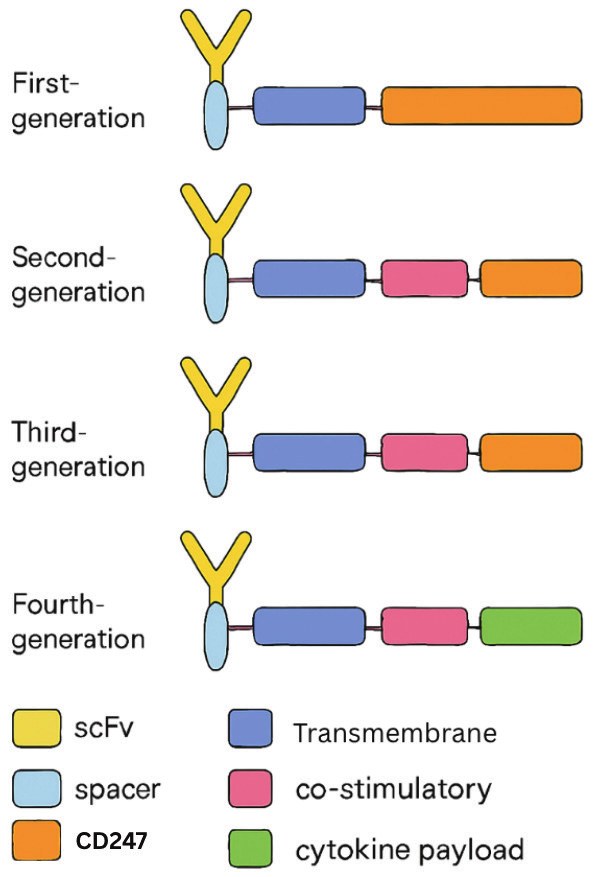
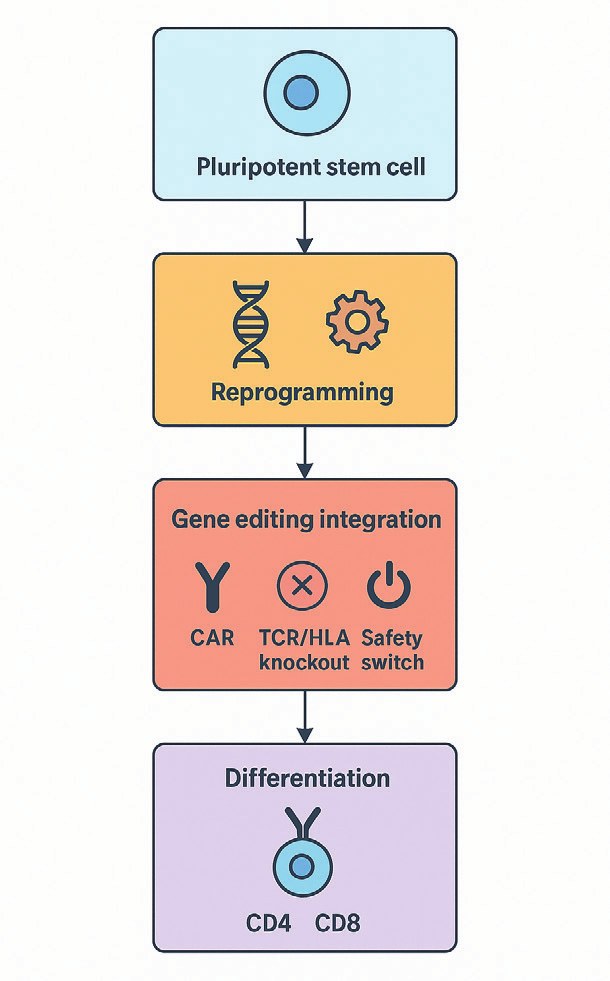
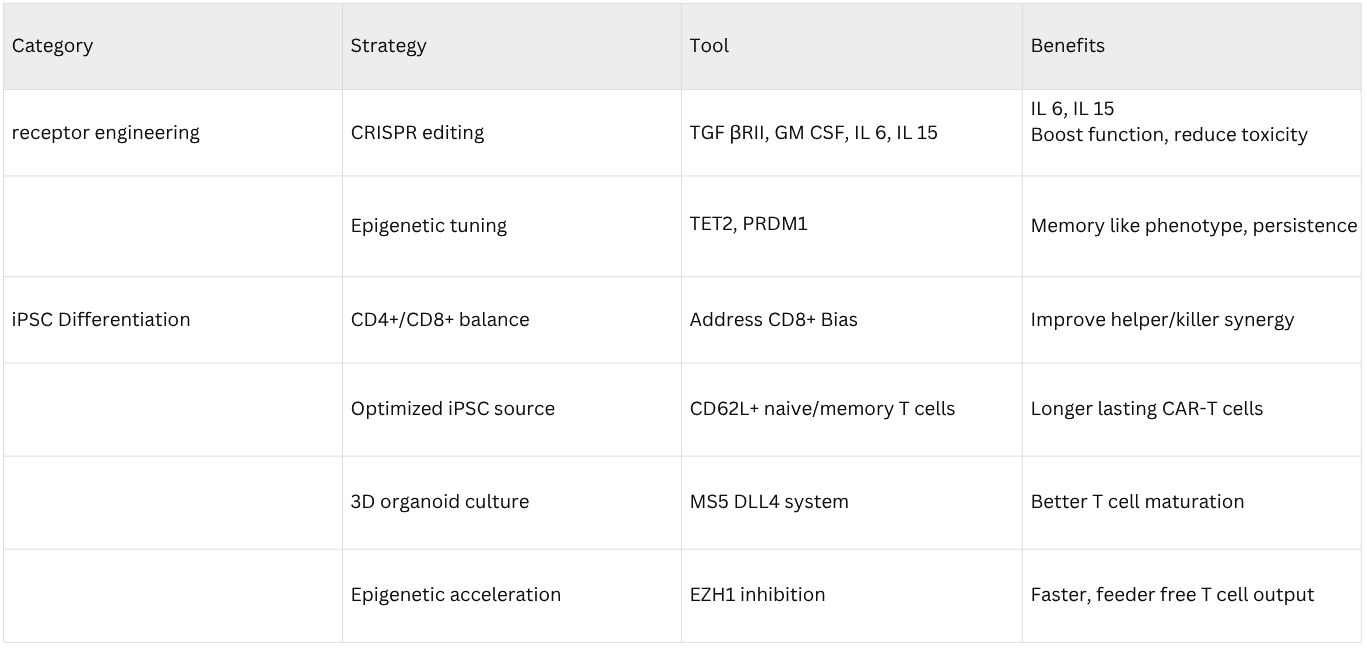
The three figures · drawn by me
CAR T-cell therapy puts most patients with some blood cancers into remission, then largely stops working in solid tumours. I wanted to know where it gives way.
CAR T-cell therapy reaches 70–90% remission in some B-cell leukaemias and lymphomas. In solid tumours the engineered cells lose function and don’t persist. My review asks where the mechanism breaks, and whether T-cells grown from induced pluripotent stem cells (iPSCs) solve the reasons it does.
Nobody assigned the paper. I chose the question, read the primary literature, built the argument across four sections (receptor generations, iPSC manufacturing, persistence strategies, clinical evidence), drew the figures, and took it through peer review.
It’s a literature review. I generated no data and ran no assays. The argument and the figures are mine. Next, I want to work with data I’ve produced myself.
Ibrahimli, H. · International Journal of High School Research, 8(7), 50–53 (2026) · sole author
DOI 10.36838/IJHSR87.50
IRIS Genetics research programme, Indigo Research, completed with distinction. Instructor: Dr Hamidreza Shaye, postdoctoral scholar at Stanford University.
Third-generation CARs combined two co-stimulatory domains, CD28 and 4-1BB. More signalling should have meant more persistence. It mostly didn’t beat the second generation.
That suggests co-stimulation behaves less like a dose and more like a shape: the timing and sequence of signals may decide whether a T-cell stays durable or becomes exhausted. I can’t test that yet, so I read what I can on iPSC-derived lines with PD-1 removed, trying to tell whether they make a genuinely different cell or the same one failing more slowly.